Oasis Palisades – Acupuncture, Herbs & Massage
Your Pacific Palisades Health & Wellness Center

Chinese Medicine and Infertility

This month brings us National Infertility Awareness week from October 19th – 25th. Over seven million American couples are affected by infertility. Chinese medicine has become increasingly popular as a treatment option as awareness of its effectiveness has grown.

Traditional Chinese medicine has been used for hundreds of years to treat infertility and includes the use of acupuncture, Chinese herbs, and dietary and lifestyle therapy. Benefits range from improved ovarian and follicular function to an increase in blood flow to the uterus, helping to create a thick, rich lining. Chinese medicine is also used to treat men, increasing sperm count and improving mobility and morphology. The key to successfully enhancing fertility with Chinese medicine is to bring balance to the body and emotions. Treatment is customized to meet the individual needs of each person. Stress relief and relaxation therapies are incorporated for overall health.

Western Fertility Treatment Combined with Chinese Medicine

Chinese medicine can be used on its own, or safely combined with modern western fertility treatment.
Studies showing increased success rates of In Vitro Fertilization (IVF) when acupuncture is done before and after embryo transfer have made headlines in recent years. In a widely published German study, those using acupuncture with IVF achieved a 42% clinical pregnancy rate compared with only 26% that did not receive acupuncture. A recent American study involving 114 women showed that 51% of the women who had both acupuncture and IVF treatments became pregnant versus only 36% of the women who had IVF alone. In addition, while 8% of the women in the acupuncture group miscarried, the rate of miscarriage in the IVF-only group was 20%.

Success with acupuncture and IVF is attributed to acupuncture’s actions of:
•    Improving ovarian function to produce better quality eggs
•    Regulating hormones to produce larger numbers of follicles
•    Increasing blood flow to the uterus and increasing the thickness of uterine lining
•    Relaxing patients and decreasing stress
•    Preventing uterine contractions
•    Lessening the side-effects of medications used during IVF
•    Strengthening and regulating the immune system
•    Improving male semen to create better quality and quantity of embryos
•    Decreasing the chance of miscarriage

Other western treatments such as IUI, GIFT, ZIFT, and hormonal therapies are also more effective when acupuncture is added as an adjunctive therapy.

The Chinese Medicine Perspective
From a Chinese medicine perspective, the goal of treatment is to bring balance to each patient by addressing their unique “patterns of disharmony” (or areas or imbalance).

Patterns of disharmony take into account -

•    Yin & Yang –
Yin and Yang are opposites. A person’s symptoms can be looked at in terms of yin/yang parameters. For example, cold is yin and heat is yang.  Damp is yin and dry is yang. An acupuncturist’s job is to apply the theories of yin and yang to all aspects of the patient. Specifically for fertility, one would ask – do the feet feel especially cold? Is the abdomen particularly cold to the touch? Are there hot flashes? These symptoms indicate Chinese medicine imbalances of yin and yang.
•    Qi, Blood, and Body Fluids –
Qi (vital energy), blood, and body fluid are fundamental substances that sustain health. Imbalances in these three areas can cause a variety of health problems including difficulty conceiving. Qi, blood, and body fluids can be weak and deficient, in which case they are unable to nourish the body and function properly. Deficient qi can cause fatigue, heavy periods, or shortness of breath. Deficient blood and body fluids might create late periods, dry skin and hair, dizziness, and possibly blurry vision. On the other hand – qi, blood and body fluids can be excess and overflowing in which case they become stuck or stagnant. Blood that is stuck can cause sharp, fixed pain such as severe menstrual cramps. On the emotional side, stuck qi can cause frustration and irritability. To attain balance, these three vital substances need to be strong and healthy in their flow.
•    Channels and Collaterals –
The channels and collaterals are considered to be a series of connecting passages through which qi and blood flow. The primary channels are indicated by the lines that are shown on acupuncture charts. Ten of the 12 primary channels are named for organs they are associated with. It’s important to note that these organs in Chinese medicine are not the same as their western counterparts. The Chinese Kidney, for example, may have some of the same functions as the western Kidney, but it is a much broader concept than simply the anatomical organ. If the yin of the Kidney meridian is deficient there may be feeling of heat or hot flashes, ringing in the ears, back pain, or dry symptoms such as dry throat, dry mouth, or vaginal dryness. A Kidney yang deficiency creates low libido, frequent urination during the night, cold feet, or pain in the back and knees. In both these cases, it’s likely that the anatomical kidney is perfectly healthy, but both imbalances hinder fertility.  Imbalances in the Liver meridian can also lead to difficulty conceiving. Frustration, anger, and irritability are associated with the Liver meridian and cause the qi to become stuck or stagnant.

This brief explanation of patterns of disharmony just touches the surface in describing the many different ways an acupuncturist analyzes imbalance. Most patients have multiple patterns going on at a time, sometimes as many as eight or ten.

The Best of Both Worlds

We are fortunate to be living where we do and to have options available to enhance and optimize fertility. Chinese medicine offers us centuries of holistic wisdom, insuring that the whole person is brought to a state of balance and vibrant health. Western medicine provides us with the high tech power of modern assisted reproductive technologies and the ability to micromanage human physiology. When used in conjunction with one another, many people discover “the best of both worlds.”

To learn about the Oasis Palisades Fertility Enhancement Treatment Program, click here.

Chinese Medicine Treatment for Depression and Anxiety: A Holistic Approach to Emotional Health

About Depression and Anxiety
Although depressive disorders and anxiety are commonly seen together, there are distinct differences between a diagnosis of depression and one of anxiety.

Common symptoms of depressive disorders include emotions such as
hopelessness, despair and anger. Energy levels are usually very low, and depressed people often feel overwhelmed by day-to-day tasks and personal relationships. There is a decreased interest in most activities, possible insomnia, fatigue, and feelings of emptiness and worthlessness. When depression is at its worst, hopelessness sets in and, in some people suffering from severe depressive disorders, thoughts of suicide ensue.

Symptoms of generalized anxiety disorder may include excessive, ongoing worry and tension; an unrealistic view of problems; restlessness or a feeling of being “edgy”; irritability; muscle tension; headaches; difficulty concentrating; trouble falling or staying asleep; and being easily startled.

In addition, people with generalized anxiety often have other anxiety disorders such as panic disorder, obsessive-compulsive disorder, and phobias.

According to the Nation Institute of Mental Health, 18.8 million American adults suffer from clinical depression and 19.1 million Americans suffer from anxiety disorders.

Research on Acupuncture’s Effectiveness

The National Institutes for Health (NIH) have established the National Center for Complementary and Alternative Medicine which funds research studies in various holistic treatments. In one study of women suffering from depression, 70% of participants experienced at least a 50% reduction of symptoms. This research marked the first U.S. randomized, controlled, double-blind study of acupuncture’s effectiveness in treating depression. The NIH funded study concludes, “Acupuncture may alter brain chemistry by changing the release of neurotransmitters and neurohormones in a good way.”

Stanford researchers, using a small sample of 61 pregnant women, found that those who were given acupuncture treatments had significantly fewer depressive symptoms. The researchers conclude that “acupuncture holds promise for treatment of depression during pregnancy,” and may help with the long term management of depression.  In an Australian study, 65% of patients diagnosed with anxiety and pain reported that acupuncture “greatly helped” relieve their symptoms. Another 24% said that it “helped.”

Further studies show that Traditional Chinese Medicine used in combination with western pharmaceutical treatment of depression and anxiety is more effective than either modality when used on its own.

The Chinese Medicine Perspective

With such promising statistics from Chinese Medicine research studies, it’s important to look at how Chinese medicine views depression and anxiety.

Traditional Chinese Medicine (TCM) has addressed the link between the body, spirit and mind for more than 2000 years. In TCM, the belief is that illness affects both the mind and body; there is no separation between the two. Therefore, emotional disturbances have associated physical symptoms and, in reverse, physical disorders evoke emotional responses.

The first objective of a TCM practitioner is to discern a relationship between all symptoms a patient presents with in order to establish what is called a “pattern of disharmony”. Treatment is aimed at restoring harmony and bringing the body into balance, and the whole person is always taken into account. The theories used to establish the TCM “patterns of disharmony” include Yin and Yang, Internal Organs; Qi, Blood and Body Fluids, and Five Phases. (Click here for more detailed information). The whole person is always taken into account.

Patterns of Disharmony in Depression and Anxiety

In looking at Patterns of Disharmony, the most important thing to remember is that organs in Chinese medicine are not the same as their western anatomical counterparts. If you have a Pattern of Disharmony affecting your “Liver Qi” or your “Heart Yin”, it is highly unlikely that anything is wrong with your western liver or heart. We capitalize the first letter of the Chinese medicine organs to make the distinction.

Patterns seen in depression and anxiety include:

* Heart and spleen Qi deficiency – Physical symptoms may include palpitations, insomnia, poor memory, lack of appetite, fatigue, poor digestion, and a pale tongue. Emotional symptoms include excessive worry and feeling timid.

* Heart Yin deficiency – Physical symptoms may include absentmindedness, dizziness, insomnia, low back soreness, dryness, sensations of heat, tinnitus, and a red tongue with little coating. Emotional symptoms include sensitivity and irritability. Yin deficiency is commonly seen during menopause.

* Phlegm  – Physical symptoms may include obesity, feeling weighted down, congestion, dizziness, fatigue and a swollen tongue. Emotional symptoms include depression and feeling cloudy or experiencing dullness of thought.

* Liver Qi stagnation – Physical symptoms may include nausea, bloating, premenstrual symptoms, rib-side pain, belching and possibly insomnia. Emotional stress affects the liver and includes irritability, frustration, and anger.

* Liver and/or Heart fire – Fire is often caused by prolonged Liver qi stagnation. Therefore, the symptoms are the same as above and also include a bitter taste in the mouth, headaches, ringing in the ears, dizziness, sores in the mouth, red eyes, red face and a quick temper.

Treatment

Patterns of disharmony usually do not exist on their own. Typically, patients manifest with anywhere between 3 and 8 patterns at any given time. This exemplifies the need for customized treatment – each patient should be diagnosed according to his or her own unique constitution and patterns of disharmony.

For example, an older frail man who has been diagnosed with depression comes in with a pale tongue, low energy, and sadness. He is deficient and given herbs and treated with acupuncture points to boost and strengthen his “Qi”. In contrast, if an overweight woman with a red face, headaches, bad temper and a heavily coated tongue comes in (also with a diagnosis of depression), she is more excess in nature and is given herbs and treated with acupuncture to clear her phlegm and heat. Had the man been treated identically to the woman (both with western diagnoses of depression), his symptoms may have worsened.

Generally, results with acupuncture and herbs are cumulative, improving week by week. Treatment begins with one or two sessions per week and tapers off as the condition improves.

Acupuncture and herbs are not only safe, but also effectively used together with anti-anxiety and anti-depressant medications. Many patients find these medications to be inadequate at completely resolving their symptoms. Others, together with their doctors, would like to wean themselves to lower dosages in order to decrease the occurrence of side effects. Patients turn to acupuncture and herbs for a variety of reasons – mostly because they find it really works!

An Introduction to Craniosacral Therapy

Craniosacral massage Craniosacral therapy is a light-touch treatment that enhances the body’s natural healing capabilities. It has been used for nearly 30 years as an effective treatment for a wide range of medical problems associated with pain and loss of function.

A craniosacral therapy session involves the therapist placing  their hands lightly on the patient’s body, tuning in to the patient by ‘listening’ with their hands to the craniosacral system. By gently working with the spine, the skull and its cranial sutures, diaphragms, and fascia, the restrictions of nerve passages are said to be eased, the movement of CSF through the spinal cord can be optimized, and misaligned bones are said to be restored to their proper position. Craniosacral therapists use the therapy to treat mental and emotional stress as well as physical pain disorders.

An osteopath, John Upledger, is credited with developing Craniosacral Therapy. While assisting during a surgery in 1970, Dr. Upledger observed a rhythmic movement of the dura mater, the membrane that encompasses the brain and spinal cord.  The findings of the research team he supervised first established the scientific basis for the craniosacral system. The foundation of craniosacral therapy is the belief that the sacrum moves synchronously with the cranial bones.

The Craniosacral Therapy practitioner works with the patient to release restrictions and assist the body’s self-correcting mechanisms. Rather than deciding how these changes should be made, the therapist follows cues from the body on how to proceed. Generally using about five grams of pressure, or about the weight of a nickel, the practitioner evaluates the body’s craniosacral system. This system plays a vital role of maintaining the environment in which the central nervous system functions. It consists of the membranes and fluid that surround and protect the brain and spinal cord as well as the attached bones – including the skull, face and mouth, which make up the cranium, and the tailbone area, or sacrum. Since the brain and spinal cord are contained within the central nervous system, it is easy to see that the craniosacral system has powerful influence over a wide variety of bodily functions.

Craniosacral Therapy has been shown to alleviate a wide range of conditions, including traumatic brain and spinal cord injuries, migraine headaches, chronic fatigue, motor-coordination impairments, chronic neck and back pain, scoliosis, central nervous system disorders, temporomandibular joint dysfunction (TMJ), stress and tension-related problems, and orthopedic problems. While the focus of Craniosacral Therapy is to uncover the source of the problem, symptom relief also is achieved. The length of time and number of sessions needed is extremely variable and depends, among other factors, on the complex layers of injury and trauma that may mask the original cause of the problem as well as the body’s defense mechanisms. Due to its gentleness and effectiveness, many people include Craniosacral Therapy as a component in their personal wellness programs. They report having more energy, sleeping better and being sick less often.

Patients often report a sense of deep relaxation during and after the treatment session, and may feel light-headed . This is popularly associated with increases in endorphins. Craniosacral therapy is claimed to be particularly beneficial in children. Adverse side effects of treatment are uncommon.

The Therapeutic Benefits of Hot Stone Massage

Hot Stone Massge

by Antonia Balfour, L.Ac.

Hot Stones have been used for therapeutic purposes since ancient times, but only recently has Hot Stone Massage caught on as a popular massage treatment.

In Hot Stone Massage, smooth, flat stones are heated and placed on key points around the body. The stones are often river rocks made from basalt which retain heat due to their high iron content.

The massage therapist holds the heated stones to massage certain areas. The heat of the stones benefits the muscles by warming and relaxing them. This enables the therapist to apply deep pressure while still promoting relaxation. Warmth creates expansion of the blood vessels, encouraging blood to flow easily. In addition, hot stones stimulate and increase the operation of the overall lymph system.

Most people find the treatment to be enjoyable and relaxing as the combination of warmth and movement calms the nervous system and relaxes the body.

Hot Stone treatments are most often used to treat back pain, poor circulation, osteoarthritis, stress, anxiety, insomnia, and depression.

For more information on whether Hot Stone massage will benefit your condition, please call us at (310) 454-5855.

Overcoming the Discomforts of Menopause: What Chinese Medicine Has to Offer

More and more women are turning to Chinese Medicine for the treatment of menopausal symptoms, particularly after recent concerns regarding the safety of hormone replacement therapy (HRT). Recent research published in the Journal of the American Medical Association showed that HRT may lead to an increase in the risk of heart disease, breast cancer, stroke, and blood clots. HRT has also been linked to gallstones and gallbladder disease.

Acupuncture and Chinese herbs are natural therapies offering significant relief from the debilitating symptoms women experience as they go through menopause without the risks associated with more conventional treatment.

When Roslyn Samet began going through menopause, she experienced major discomfort from hot flashes – not only at night, but frequently during the day, sometimes as often as once or twice an hour. “I really didn’t feel good about taking hormones,” said Samet. “Cancer runs in my family and I didn’t even consider HRT as an option. It seemed so unnatural to me… I just refused to do it”. Instead, she turned to acupuncture and Chinese herbs for an answer.

“The hot flashes were like a surge of heat, coming on all of a sudden,” Samet described. “And I would stay hot for a while, then suddenly become chilled. At night there was always a battle – putting covers on, then taking them off”. Other symptoms Samet experienced included a constant craving for sweets, memory loss, difficulty concentrating, and restless sleep. Her acupuncturist prescribed a regimen of acupuncture and Chinese herbal therapy. “After beginning the herbs, I would feel the surge just beginning, then suddenly it would die down. The sensation was so diluted, I didn’t even feel hot flashes. It was miraculous.”

Her other symptoms improved as well. And, she added, the Chinese medicine helped her lose some weight, or certainly keep her weight under control. “Once I had the acupuncture and herbs, I really didn’t feel like I was a menopausal person,” said Samet. Chinese medicine views menopause as a period of natural transition in a woman’s life, but a time where the body’s energy and hormones are in a state of flux. This often results in various symptoms which can range in severity from uncomfortable to debilitating.

As a holistic system, Chinese medicine does not separate physical symptoms from those of an emotional nature. Instead, an individual is always looked at as a whole. Each symptom is looked at in relationship to all other presenting symptoms in order to find a complete health pattern. The goal of the practitioner is to bring balance to the patient — simultaneously treating both the physical and emotional aspects of the condition.

Perhaps the most unique feature of Chinese medicine is that each treatment is individualized according to the specific needs of each patient. This means that every patient with a certain symptom — let’s take hot flashes as an example — will be treated differently depending on their individual constitution. One patient may have hot flashes accompanied by weak vision, dizziness, night sweats, and restless sleep. Another patient may have low back pain, memory problems, and vaginal dryness along with the hot flashes. One of these women may notice that she feels melancholy and cries easily, whereas the other one may get angry and frustrated. Both these patients will be treated with different acupuncture points, different nutritional advice, and different herbs.

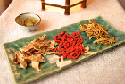
In Chinese herbalism, custom formulas are written with anywhere between 6 and 18 herbs which address the full constitutional diagnosis. Many herbs have sedating and harmonizing properties while others work to promote the body’s innate ability to heal and recuperate. Menopause is looked at in Chinese medicine as a period in which the energy of the Kidney is declining. It is important to note that the Chinese Kidney is not the same as the Western organ. In Western medicine, an organ is simply an anatomical structure. In Chinese medicine the concept of each Internal Organ encompasses much more. There can be an anatomical structure, but there is also a corresponding emotion, tissue, sensory organ, and element. In the case of the Chinese Kidney (which is capitalized to distinguish it as the Chinese organ), the associated element is water, the emotion is fear, the sensory organ is the ear, and the corresponding tissue is bone. In addition, 12 of the Internal Organs correspond to the 12 main acupuncture meridians (or channels) that run through the body.

There is “qi” (or energy) flowing through each meridian. If an Internal Organ is out of balance, the qi of that organ will be damaged. Therefore, the Chinese Kidney shouldn’t be equated with the Western Organ – although there are some similarities. The Chinese Kidney is said to store the body’s “essence”. During menopause, the “essence” of the Kidney begins to diminish. This leads to a decline in both the qi of the Kidney and the fluids which nourish and moisten the body. Symptoms of a deficiency of “essence” may include fatigue, memory problems, and thinning of bones. Many women experience joint pain and neck tension, while others begin to notice a weakness in vision or hearing. Treatment always focuses on restoring balance and harmony. This is done by strengthening Kidney “essence” and building up the qi and fluids. If a woman is experiencing dryness of the eyes, skin and hair and has brittle nails or constipation, then much of the focus will lie in building up the body fluids. If she has dull thinking, weakness, and feels fatigued most of the time, treatment will focus on nourishing the qi. Whatever discomforts a woman is experiencing, Chinese medicine offers a unique perspective and individualized treatment that takes into account all symptoms of the body, mind, emotions, and spirit.

Traditional Chinese Medicine & the Treatment of Children

Child photo Recent media attention has focused on the flagrant overuse of antibiotics causing increasing numbers of resistant strains of bacteria. Consequently, more and more people are discovering herbs and Traditional Chinese Medicine (TCM) as a safe, effective alternative for the treatment of many childhood illnesses.

Click here to read more.

Oasis Palisades in the Palisadian Post

Thank you Palisades Post for featuring Oasis Palisades in the April 9th paper. If you missed the article, click here for the online version.

Healing with Essential Oils: the Benefits of Aromatherapy Massage

by Teresa Xu

Massage“The way to health is to have an aromatic bath and scented massage every day.” ~Hippocrates

Picture yourself in the state of ultimate relaxation. Relax your eyelids and unburden your muscles. Release your mind of the dizzying stress involved in daily life. Hear the sound of flowing water, like a song playing on smooth pebbles. Comfort envelopes your body. All is fulfilled by the last touch: a scent of French Lavender.

Amazingly, aromatherapy with essential oils is an important modality in healing and relaxation. According to Oprah Magazine’s Aimee Lee Ball, fragrance molecules that are mixed in the air will travel to the interior of the nose where they encounter sensory receptors. These receptors emit a variety of signals directly to the brain that vary depending on the specific aroma. Scents can have intriguing effects on humans. For example, common oils such as lavender, rosemary, thyme, and cedarwood are used in massage to put the body into a state of relaxation and calm. Lavender reduces pain and mental unpleasantness. It improves the mood and, interestingly enough, helps make math computations easier and quicker. Rosemary is also a mood-lifter. Its scent promotes positive and cheerful feelings, and has been shown in studies to help prevent hair loss. Vanilla is very pleasant to smell and relieves nervousness. Chamomile, too, reduces anxiety and calms the nerves. Peppermint reminds the body to stay awake and alert. It is used to build strength, enhance oxygen consumption, and lower heart rate and blood pressure. Many athletes use peppermint to enhance performance.

When aromas and essential oils are applied during a massage, the therapeutic benefits can be significantly enhanced.

A good massage not only calms you down and helps you relax, it also brings you energy. Research shows certain blends of oils to possess smells that can be described as uplifting and energizing. For example, oils from clove, eucalyptus, Indian bay, and spearmint can be used by anyone who desires a more active lifestyle and more energy to live it. Essential oils used during a massage can bring out the best in you – a lively and healthy you. Who’s to say coffee is the only way?

Fragrances provide a fundamental part of our healing, both emotionally and physically. It is vital that we maintain a healthy balance throughout our work and play. Daily stress can lower spirits and energy for days to come, but a good massage with essential oils is in fact the cure to everyday life, and an amazing experience for anyone.

Teresa Xu is a junior at Wildwood School interning at Oasis Palisades.

Holistic Tips to Boost Metabolism

by Teresa Xu

Springtime is here which means spending time outdoors, having fun, and eating! Approach your meals with a healthy attitude, indulge (in moderation), and follow these simple tips to optimize your metabolism.

Eating
Did you know that eating can help you lose weight? It can if you eat the right things! Here are some foods that help boost your metabolism:

-Cayenne Pepper: generally used in the form of powder, cayenne raises your body temperature which in turn raises your body’s metabolism (this is called a thermogenic action). You can add a pinch of this spicy powder to most recipes and let its effects surprise you!

-Ginger: either chopped or powdered, this food is most generally found in Asian recipes. You can find ginger root in the produce section of a grocery store. Remember to peel before slicing or grating it. You can grate it into smoothies and salad dressings for a zing to your food!

-Cinnamon: this sweet powder adds an exotic touch of flavor to any food. Studies have shown the cinnamon is directly involved in controlling insulin levels which influences whether your body stores or burns fat.

-Detox Foods: a detox diet boosts your metabolism by cleansing the toxins from your body. In this diet, you eat primarily vegetables, plus certain fruits and herbs that encourage the elimination of toxins. The goal of the diet is to help your body regain a healthy metabolism level. The diet program should last about one week.

Exercise
Another way to boost metabolism is through exercise.

Aerobic exercises help burn calories and increase metabolism while you’re working out. Engage in aerobic activities at least 3 times a week.

In addition you can include workouts specifically designed to build muscles. Lifting weights and/or other strengthening activities like push-ups and crunches will boost your resting metabolism 24/7. Including muscle building exercises on a regular basis (at least 2 to 3 times a week) is a great way to continually burn calories — even when resting!

Massage
Of course, massage is an effective and enjoyable way to help increase metabolism. It is proven that receiving massage therapy at least once a week can have a wonderful effect on the body to help with losing weight. One benefit of massage is in reducing stress levels in the body. High stress contributes to the body’s storage of excess fat, and lowers metabolism levels. Massage puts your muscles into a better fat burning mode, as it improves flexibility and prepares the muscles for more efficient, effective work. Massage also greatly improves blood flow and circulation throughout the body. This contributes to increasing the rate of metabolism and helps burn fat faster.

Acupuncture
Acupuncture utilizes points in the ear and body to maintain healthy weight and increase metabolism. Acupuncture treatments are customized for each person depending on their individual needs with regard to digestion, weight, and metabolism. Specific points may be included for appetite control, sugar imbalances, water retention, impulsive eating, thyroid stimulation, and weight gain associated with menopause or PMS.

The best way to prevent excess weight-gain is to maintain a healthy attitude about eating. Avoid feelings of guilt and bingeing one day only to starve yourself the next. Enjoy life while adopting some healthy habits you can keep up year round!

Teresa Xu is a junior at Wildwood School interning at Oasis Palisades

Relieving Neck Pain with Massage & Acupuncture

Qi Blends

By Antonia Balfour, L.Ac.

Has this ever happened to you? You put your car in reverse, quickly turn your head around to look behind you, and suddenly — UH-OH — your neck has seized in pain??

The neck is one of the most common places we experience pain. Because of its flexibility and the effort needed to carry the weight of the head, the neck is susceptible to pain and injury. Sleep habits, posture, work habits, and athletic activity can all contribute to muscle spasms and nerve damage in the neck.

Neck pain can also be the result of a degenerative condition such as osteoarthritis, or injuries such as whiplash. A herniated disk or pinched nerve can also cause pain in the neck.

If neck muscles are in spasm from stress, misuse, or overuse, massage is a great modality. Massage will help to relieve the tension in the muscles and relieve muscle pain and inflammation. Using herbal creams or liniments with massage therapy can increase the therapeutic benefits by increasing circulation in the neck and relieving tight muscles.

In Chinese medicine it is said, “when there is pain, there is no free flow.” What does this mean, no free flow? Chinese medicine teaches that Qi (life force energy) and blood flow through meridians, the lines throughout the body you see on acupuncture charts. There are two primary causes of a lack of free flow – Qi can be weak and deficient, or Qi and blood can be stuck, or stagnant. Deficient pain feels tired and weak – the head may feel too heavy for the neck to hold up. If the Qi is stuck or stagnant, the pain is dull, with a generalized achey feeling. If the blood is stuck (or static), pain is fixed, stabbing, and sharp.

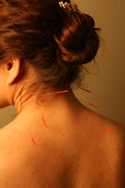
Acupuncture needles are used to free the flow. Needles are placed in the meridians not only in the neck, but also around the body to build up Qi that is deficient, and circulate the Qi and blood that are stuck. Acupuncture is beneficial for pain relief and for healing the underlying causes that lead to pain in the neck.

© Oasis Palisades – Acupuncture, Herbs & Massage